Category: Uncategorized

New Idiom: Doomscrolling

Hooded person reading a phone while seated among cemetery graves

Doomscrolling describes the activity of continually looking at distressing news and social media content.

The word combines two other words- doom and scroll.

Doom refers to a catastrophe, an unavoidably bad future, or death. It can be used as a noun with the word “feeling” in sentences such as, “I have a feeling of doom whenever I read the news.” It is also a verb and is commonly used with the passive voice: “He was doomed to fail his exam because he never studied.”

In the modern context, the verb scroll means to move texts, images, or content across a display screen: “You have to scroll down the page to find the like button.”

In combination, doomscrolling is scrolling through social media that gives one a sense of emotional discomfort or pain.

Here are some examples of how to use it in a sentence:

Simple present tense: “Every night I doomscroll before I go to bed.”

Continual tenses: “I stayed up late last night because I was doomscrolling.”

Gerund used as a noun: “I hate doomscrolling, but I do it anyway.”

Techniques to Remember English Spelling

English is inconsistent!  I am truly sorry.  There are languages in which the spelling will tell you how a word is pronounced and a sound is always spelled the same way.  Unfortunately, English is not one of those languages.  Sure, there are some rules, but the rules have exceptions- sometimes a lot of exceptions.  Take the words believe and receive: the vowel sound of the second syllable is the same in each word, so why are they spelled differently?  And then there is then and than.  You may think there are pronounced differently, and they are, if you say each word in isolation, but in a sentence- most Americans say them just the same.  Hear and here are pronounced the same but spelled differently.

Oh, my.  How can we remember which is which?

There are little tricks we can use to help us remember.  A fancy word for such a trick is mnemonic (the first m is silent), which is related to the word meaning memory in ancient Greek.  A mnemonic device could be an expression, a poem, an image, or an acronym.  For example, English speakers learning to read sheet music learn the sentence “Every good boy deserves favor” because the first letter of each word (EGBDF) indicates the notes on the lines.

Related image

The short rhyme, “April showers bring May flowers” reminds us that in many areas of the US and Europe, the month of April is often rainy and the month of May is when many flowers bloom.  It also teaches us to tolerate uncomfortableness (rain)  that will bring future benefits (flowers).

File:2013 Rochester Lilac Festival - Flower City Lilac - 06.JPG

What are some mnemonic devices to remember how to spell words in English?  Let’s go back to believe  and receive. Native English speakers are taught in school the sentence “I before E except after C.”  Repeat out loud it several times so it stays in your memory. When you need it, let it roll out in your mind.  I use it myself.  I’ll be scribbling along, then I’ll hesitate.  How do I spell perceive? I’ll ask myself.  Then I say to myself, “I before E except after C.” There’s the C, so it must be followed by EI.

How about then and than? I tell my students to remember that the word time  has an E in it, and so does then. Then is used when talking about something that happened at a certain time or after something else happened.

“I enjoyed my time in college. I made a lot of friends then.”

” First I went to New York.  Then I visited Washington, DC.”

Both than and comparison have the letter A.  Than is used in sentences comparing one thing to another.

“My sister is shorter than me.”

How about the difference between hear and here? Hear contains the word ear, so you have to use your EAR to HEAR.

Try making up your own mnemonics.


Sentence Stress and Phrasing in English

There are problems for non-native English learners in both speaking and in listening that have to do with sentence stress and phrasing.

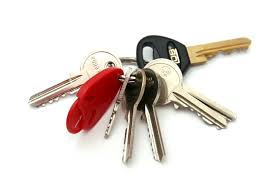
When a native speaker says a sentence, there is a pattern of stressed and non-stressed words.  For example, let’s look at the sentence: “I left my keys at home.”  The words that are stressed are “left,” “keys,” and “home.”

“I left my keys at home.”

In addition to stress, there is a pattern of phrasing, so a group of stressed and non-stressed words are slid together and pronounced as if they were one word.  The above example would sound like:

“Ayeleft mykeys at’home.”

A non-native learning, who knows and understands the separate words “my” and “keys”, would be confused by what sounds like “mykeys.”

“Mykeys?”  they would wonder.  “What are ‘mykeys’?  Do they mean ‘monkeys’?  Is it a name?  Is it a whole new vocabulary word?”

monkeys

If non-native speakers don’t use stress and phrasing patterns when they speak English, they tend to pronounce each word in the sentence with equal stress.  Everyone will understand what they are saying; it just sounds like they are a non-native English speaker.

In listening skills, knowing about stress and phrasing make a huge difference, the difference between understanding  ” my” and “keys” and wondering what on earth are “mykeys.”

I’m going to list some guidelines for you to pay attention to.  These are not “rules.”  Americans are not taught this in schools.  These are more descriptions of how people normally speak.

Words that are stressed are nouns, main verbs, adjectives, and adverbs.  These are content words, the most important words in the sentence that give you the main meaning.

Unstressed words are articles, auxiliary verbs (except for can’t), pronouns, and prepositions.  These are structure words that put the content words together.  You can think of them as “small” words.

However, there might be a reason to emphasize a structure word, in which case the word is stressed.  For example, if the question is:

“Whose keys did you leave at home?”

the answer would stress the word “my”

“I left my keys at home.”

If the question is: “Did Jane leave her keys at home?”

the answer would stress the word “I”

“No, I left my keys at home.”

In phrasing, related words are grouped together, for example, a noun with the associated article or possessive pronoun (“my keys”) or a preposition with its object (“at home”).

To help you learn to recognize stress and phrasing patterns, I suggest listening to native speakers.  Get a recording that you can stop and replay.  Listen to one sentence at a time and try to copy it.  Pay attention to the stress and phrasing.  Then won’t have to wonder what “mykeys” are.
keys